

Pipeline
B2B sales cycle: stages, length, and where time gets stuck
What a B2B sales cycle is, how it differs from the pipeline, typical stages, and what stretches the time from first contact to close.
The B2B sales cycle is the time and the sequence of decisions between a useful first contact and a yes or a no. The pipeline is a picture of every open opportunity sitting in those stages. Mixing the two leads to stacking deals without knowing how long they actually take to leave.
A short cycle is not always better. It has to match how the buyer decides. Sales management means knowing that path, making it visible, and removing waits that do not belong on it.
Stages you almost always find
- Targeting and first contact. The person is identified. Nothing is an opportunity yet. See prospecting.
- Discovery. You confirm a problem, not only a polite interest.
- Qualification. Need, budget or envelope, stakeholder, deadline. BANT and MEDDIC belong here.
- Proposal. Demo, quote, or pilot. The buyer has something to compare.
- Negotiation and internal approval. Procurement, security, legal, economic buyer.
- Close. Won or lost, with a reason.
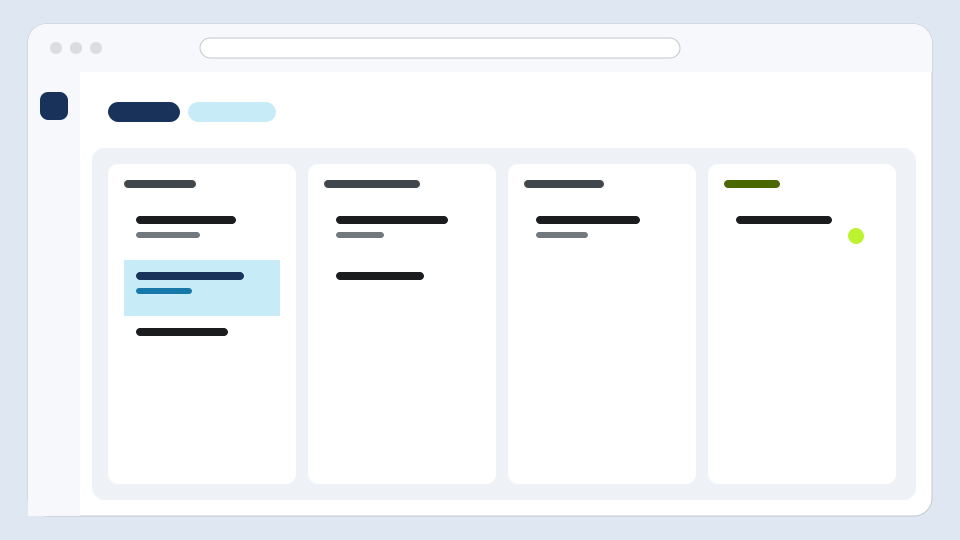
These stages become board columns. If a stage has no deliverable, it does not belong in the cycle.
What stretches the cycle
- Several stakeholders and no internal champion.
- A proposal sent too early, before the decision criterion is named.
- No next date. A deal “thinking about it” has no end.
- A pipeline with no Lost column. Ghost opportunities stay open and distort average length.
- Double entry. When the CRM is updated only on Friday, recorded stages and real stages diverge.
Measure delay as a median, deal by deal, not by adding up what the team remembers. That duration is the denominator of sales velocity.
Cycle, funnel, and Kanban
The funnel describes volume: many prospects, few signatures. The cycle describes time. Kanban describes flow and work-in-progress limits. The three answer each other:
- the funnel shows where volume drops;
- the cycle shows where time is lost;
- Kanban stops the team opening more deals than it can move.
An actionable sales pipeline ties all three to the conversation — often an email thread — rather than to a record filled in somewhere else.
Bottom line
Map the cycle to the buyer’s decisions, not to the seller’s org chart. Give each stage an exit criterion, measure the median, and remove deals with no movement. A board inside Gmail shows that cycle where the messages actually are.
Frequently asked questions
What is the difference between a sales cycle and a pipeline?
The sales cycle is one opportunity’s real path from first contact to a decision, measured in time. The pipeline is the snapshot of every open opportunity spread across those stages.
How long should a B2B sales cycle be?
There is no normal length. A few-hundred-euro tool can close in days. Software that needs procurement, security, and legal often takes months. Measure your median, not an average inflated by one large contract.
How do you shorten a sales cycle?
Qualify earlier, name the decision maker, and set a dated next action at every stage. Following up with no exit criterion lengthens the cycle instead of shortening it.