

Kanban method
Kanban method for sales: see the flow and limit work in progress
The Kanban method applied to CRM: visualize the pipeline, cap WIP, and shorten the sales cycle without adding process.
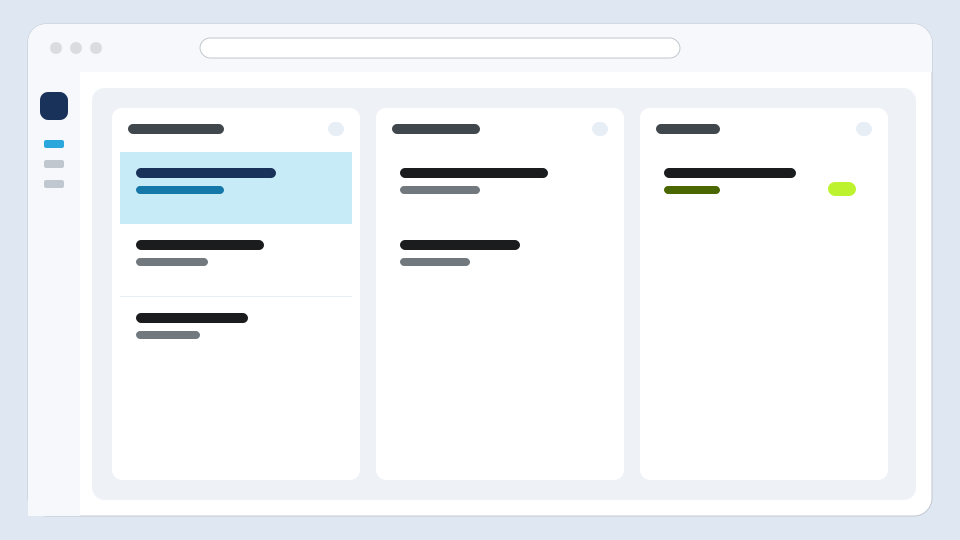
The Kanban method is a visual flow system: make the work visible, limit how many items are in progress, and start a new one only when a slot frees up. In sales management, each card is an opportunity and each column is a pipeline stage.
The word comes from Toyota plants: a kanban was the card that authorized the next part to be made, and not before. David J. Anderson later shaped the method for knowledge work. B2B selling is that kind of work: a continuous flow of email, quotes, follow-ups, and decisions, with no closed two-week sprint.
The six practices, translated for a sales team
- Visualize the work. A board beats an opportunity list where every row looks the same.
- Limit work in progress (WIP). Example: eight cards maximum in Proposal.
- Manage flow. Look at blocked cards, not only new ones.
- Make policies explicit. An opportunity leaves Qualification only when the need, a stakeholder, and a time horizon are named.
- Install feedback loops. The weekly pipeline review does this.
- Improve together. Change one column or one limit, then watch cycle time. Do not rebuild the CRM every quarter.
What Kanban measures better than a spreadsheet
| Metric | Useful sales definition |
|---|---|
| Lead time | From the first useful contact to close |
| Cycle time | Time spent in one column |
| Throughput | Opportunities won per week |
| Card age | Days without movement: a stall signal |
These measures feed conversion rate and velocity. Without them, the forecast rests on optimism.
Common mistakes
- Too many columns. A fifteen-stage board copies an enterprise CRM and nobody updates it. Five to seven columns cover most B2B cycles. Detail is in sales Kanban columns.
- No WIP limit. A hundred deals “in progress” means none of them is the priority.
- A card with no next action. Kanban shows the stage; a dated follow-up moves the deal. See follow-up tracking.
- Mixing triage and selling. The inbox (to do, waiting, done) is not the pipeline (prospect, proposal, negotiation).
Where the board should live
The method fails if the board sits in a tab opened on Friday. Sellers work in the inbox. A Kanban CRM inside Gmail sticks the card to the thread: status changes during the conversation, not after it.
Colossales follows that model: the Gmail thread becomes a card, columns carry the flow, and the data stays in the team’s Google Sheet.
Bottom line
The Kanban method is not a fresh coat of paint on a table. It is a sales management discipline: fewer deals open in parallel, clear exit rules, and a flow you can improve. The sales pipeline supplies the stages; Kanban stops them filling up without end.
Frequently asked questions
What is the difference between Kanban and a sales pipeline?
The pipeline is the set of sales stages. The Kanban method is how you run that flow: visible cards, work-in-progress limits, and explicit rules for moving from one stage to the next.
How many open opportunities can a seller handle?
There is no universal number. A useful limit is however many deals the team can actually move this week. Beyond that, deals stall and the forecast gets worse.
Does Kanban replace a CRM?
No. Kanban organizes flow. The CRM keeps the account, amount, probability, and history. They work together when the board is the daily working view.